
Why do we become so interested in birds in midlife?
You’ve probably noticed it.
One day you’re in your forties or fifties and suddenly the sparrow on the fence isn’t just “a bird.” It’s a house sparrow or a blackbird or a finch. You sit and watch them most days and can’t wait for them to see what new seed mixes you've put out on the lawn. You also start spending a lot more money on feeding them, watching in delight as they hop on the deck, squabble over food and what new species you have attracted to the garden…
It feels almost inevitable. Like a right of passage maybe. Suddenly the funny reels make sense. So of course being a scientist and constantly curious about how the world works..I needed to investigate if there was any actual research on this phenomena, turns out, it is and it’s far more common than most people realize.
The numbers behind the stereotype
Birdwatching has long been teased as a classic midlife (or post-retirement) hobby. The data largely supports the stereotype, even as younger people are now discovering it too. In the United States the average birder is around 49 years old, and participation rates climb steadily with age, peaking among those 55 and older. Nearly half of all American birders are over 55 (U.S. Fish and Wildlife Service, 2024). The pattern holds in other countries as well: a noticeable surge of interest arrives precisely when many of us are navigating the middle years.
So why then?
The psychology of the midlife bird
1. Generativity – the quiet need to care for something that outlasts us
Erik Erikson described midlife as the stage of generativity versus stagnation (Erikson, 1963). We start asking whether our lives are contributing to something larger than our own daily concerns. Raising children is the classic expression of generativity, but it is not the only one. And this is especially true when our kids fly the nest. Caring for the living world – feeding birds, recording sightings, protecting habitat – satisfies the same deep need. Birds give us a tangible, daily way to nurture something that will continue after us. In places like Aotearoa that impulse can feel especially powerful when the birds in question are endemic species found nowhere else on Earth.
2. Mortality becomes real
In midlife, death stops being theoretical. Parents age or die. Peers get serious diagnoses. Our own bodies send new signals, we enter perimenopause and suddenly we start to feel a little more conscious about our fragility. This heightened awareness of finitude often produces a hunger for experiences that feel vital and beautiful. Birds deliver exactly that: small, free, ancient creatures that migrate thousands of miles and return each spring with almost miraculous reliability. Watching them is a gentle, daily reminder that life is still vivid and ongoing (Beddington, 2024). For those of us lucky enough to live among tūī, kererū, fantails and kea, that reminder carries an extra layer of wonder.
3. The brain is ready for a new kind of attention
Bird watching is cognitively rich. It demands sustained attention, fine visual discrimination, pattern recognition, and memory. Recent brain-imaging research shows that experienced birder watchers develop denser tissue in regions linked to attention, perception, and working memory, and that these differences appear to slow certain aspects of age-related decline (Wing et al., 2026). In other words, the hobby feels rewarding because it is genuinely exercising the mind in ways many of us are looking for at this stage of life.
4. Time, space, and permission
Practical factors matter too. Children may be more independent or have left on their own journeys. Careers are often more stable. There is simply more mental bandwidth and, for many, more disposable income for binoculars, feeders, or a weekend trip. Midlife also brings a cultural permission slip, society expects us to develop a slightly eccentric, low-adrenaline passion. Birding fits the bill perfectly. However, being a very active women, I like to balance the two, hike and bird watching? Yes I think so..
5. The “spark” moment
Psychologists studying “spark bird” stories – the specific bird or encounter that hooks someone – find these moments are emotionally vivid, high in curiosity and wonder, and often become part of a person’s identity narrative (Lodi-Smith, 2026). While sparks can happen at any age, midlife provides especially fertile ground. We are more reflective, more open to new sources of meaning, and more likely to act on a sudden sense of fascination.
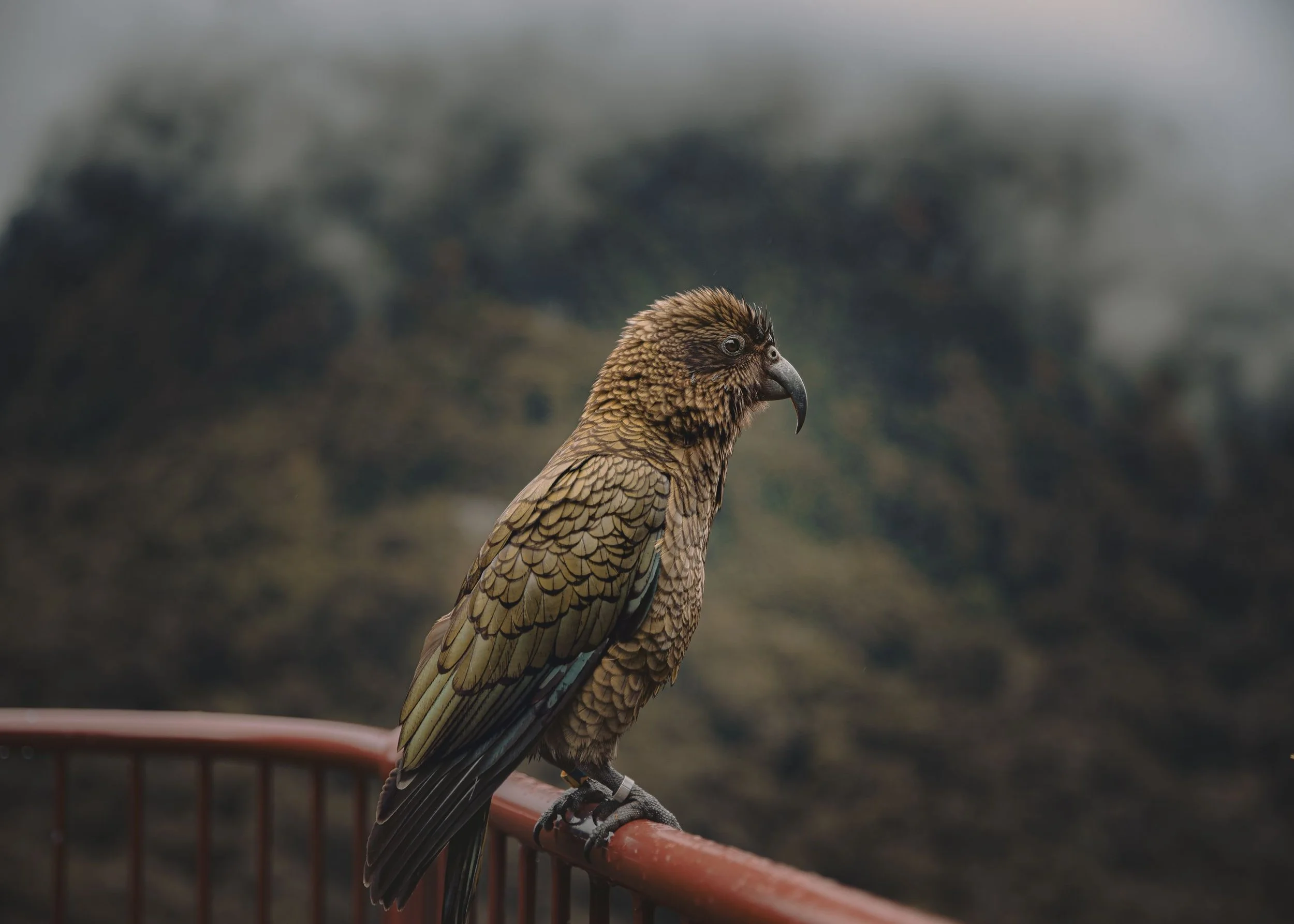
You are not ‘over the hill’ – it’s a recalibration
People sometimes joke that birding is a midlife crisis in binocular form. Or that, oh great, it has begun, we are officially over the hill..The reality is usually more palatable. It is less about escaping and more about arriving, arriving at a quieter, more attentive relationship with the living world just outside the door. Many including myself, describe it as one of the purest sources of joy they have found in years – a reliable way to feel present, curious, and connected without needing to perform or achieve. A way to pass time that feels grounded and whole. I love nothing more than sitting and watching them outside.
Birds ask almost nothing of us except attention. In return they offer beauty, continuity, and the quiet satisfaction of knowing the names of the creatures that share our neighborhood's. And how in each season they are provided for.
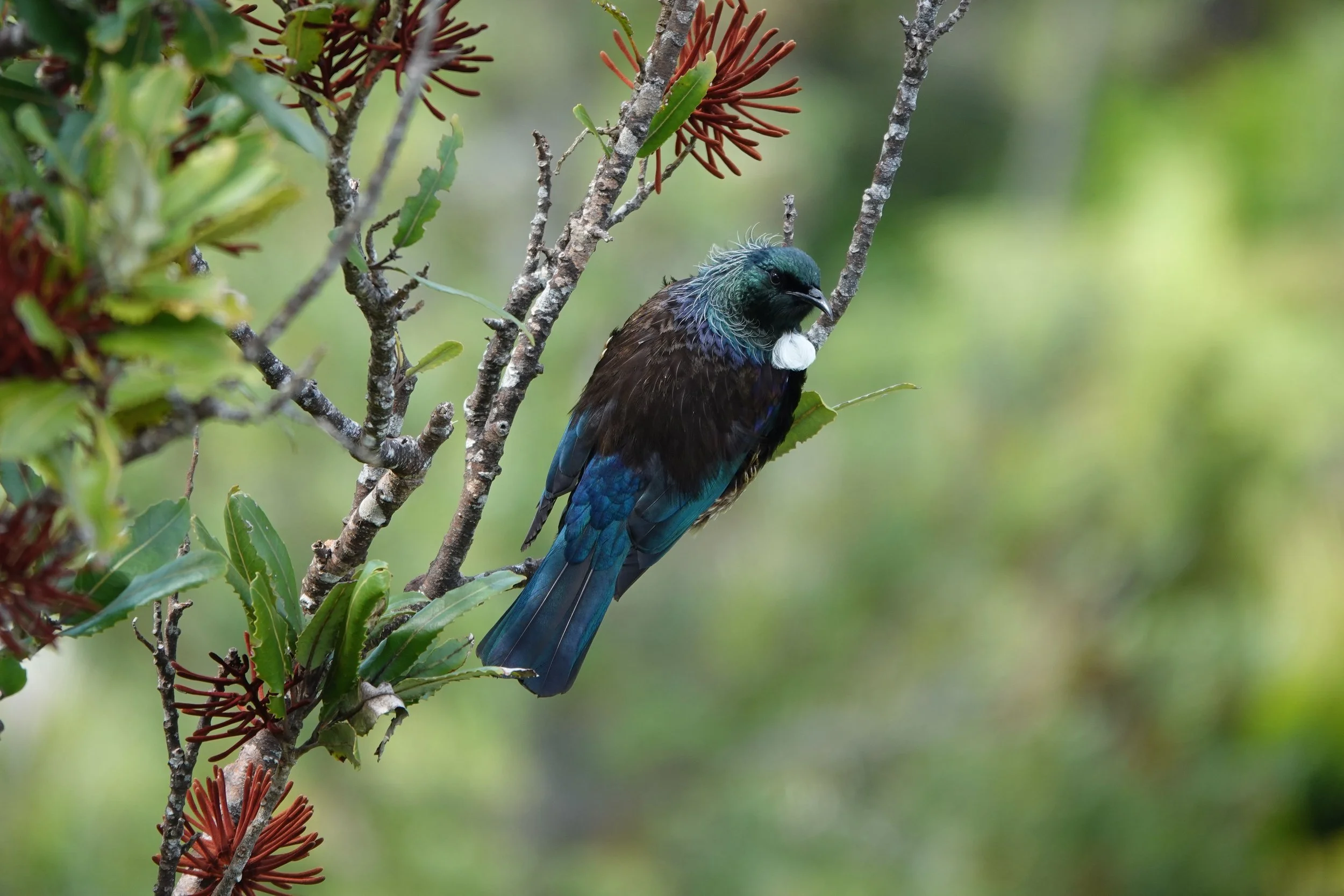
So if you find yourself suddenly stopping mid-conversation because a Tui just sang, or driving slightly out of your way to check a wetland, you are not alone. You are participating in a widespread, psychologically coherent midlife phenomenon.
You are simply learning to see. Learning to slow down and become more intentional.
References
Beddington, E. (2024) ‘Why do middle-aged people love birds so much?’, The Guardian, 8 January. Available at: https://www.theguardian.com/environment/commentisfree/2024/jan/08/why-do-middle-aged-people-love-birds-so-much (Accessed: 14 October 2026).
Erikson, E.H. (1963) Childhood and society. 2nd edn. New York: W.W. Norton.
Lodi-Smith, J. (2026) ‘Preliminary findings from The Spark Bird Project: learning about timing, emotions, and sparks through contextual self-defining narratives’, Frontiers in Bird Science, 5. Available at: https://doi.org/10.3389/fbirs.2026.1870756.
U.S. Fish and Wildlife Service (2024) 2022 Birding in the United States: A Demographic and Economic Analysis. Report 2022-4. Washington, DC: U.S. Fish and Wildlife Service. Available at: https://www.fws.gov/media/2022-birding-united-states-demographic-and-economic-analysis (Accessed: 14 October 2026).
Wing, E.A., Chad, J.A., Mariotti, G., Ryan, J.D. and Gilboa, A. (2026) ‘The tuned cortex: convergent expertise-related structural and functional remodeling across the adult lifespan’, Journal of Neuroscience. Available at: https://doi.org/10.1523/JNEUROSCI.1307-25.2026.
About the Author: Combining professional expertise with personal insight, I am a nutritional scientist dedicated to changing the conversation around women's hormonal health. Having navigated the hidden complexities of HRT over-treatment myself, I bridge the gap between clinical research and real-world experience to ensure women have the tools they need to advocate for their health. If you're a woman in perimenopause struggling with metabolic health despite doing "all the right things," the missing piece might be understanding your unique internal landscape.
